

Trainer Pay Models That Actually Retain Great Staff

The strongest default for most U.S. gyms is a hybrid model: a modest base wage plus per-session commission and quarterly performance bonuses. According to the Bureau of Labor Statistics, the median annual pay for fitness trainers sits in the mid-$46,000 range, with top earners clearing $82,000–$90,000. That spread tells you everything about how much structure matters. IDEA Health & Fitness Association recommends written wage scales and a first performance review within three months of hire. Joinfitnessflow can automate commission tracking and payroll export so the math never falls on a spreadsheet at midnight.
Before committing, run a quick sanity check: multiply your average session price by expected weekly sessions per trainer, apply your target split, and confirm the trainer clears minimum wage on their worst week. The benchmarks section below has worked examples you can copy directly.
- Recommended model: hybrid base wage + per-session commission + quarterly bonus
- Benchmark anchor: BLS median ~$46,000/year; top 10% above $82,000
- First review: within 3 months (IDEA guidance)
- Automation option: Joinfitnessflow for commission tracking and payroll export
Key Takeaways
The hybrid base-plus-commission model is the strongest default for U.S. gyms because it protects trainer income stability while keeping gym payroll variable enough to survive slow seasons.
PointDetails
Default model
Hybrid base wage + per-session commission + quarterly bonus fits most U.S. gym profiles.
BLS benchmark
Median trainer pay is roughly $46,000–$46,480/year; top 10% earn above $82,000–$90,761.
Commission range
ISSA documents typical splits of 30%–60%; tiered structures reward higher session volume.
Legal priority
Classify trainers as W-2 or 1099 correctly before setting pay; misclassification triggers IRS and DOL penalties.
Joinfitnessflow
Automates session-level commission tracking, payroll export, and retention dashboards for any pay model.
Table of Contents
- How trainer pay models compare across the most common structures
- How to choose the right model for your gym
- U.S. benchmarks and worked pay examples you can adapt
- Designing bonuses that actually change trainer behavior
- U.S. legal and administrative checklist for trainer payroll
- Step-by-step plan to roll out a new pay model
- Tools and templates you need to run any pay model reliably
- What gym operators get wrong about trainer pay
- Joinfitnessflow makes trainer compensation easier to run
- Sources
- FAQ
How trainer pay models compare across the most common structures
Every pay structure makes a different promise to the trainer and a different bet for the gym. Here is how the eight most common models stack up.
Pay ModelTrainer PredictabilityGym Cost StructureMotivation AlignmentAdmin ComplexityLegal/HR RiskBest-Fit Profile
Hourly / salary
High
Fixed
Floor time, availability
Low
Overtime exposure (FLSA)
Entry-level, new hires
Per-session flat rate
Medium
Variable
Session volume
Low–medium
Low (if W-2)
Mid-career, steady roster
Percentage split (commission)
Low–medium
Variable
Revenue generation
Medium
Contractor misclassification
Sales-driven, experienced
Tiered commission
Medium
Variable
Volume + loyalty
Medium–high
Same as commission
High-volume producers
Sliding scale
Medium
Variable
Session consistency
Medium
Low
Part-time, building roster
Guaranteed hours
High
Semi-fixed
Availability + fill rate
Medium
Overtime if hourly
New trainers, low-traffic slots
Bonus / incentive only
Low
Variable
Specific KPIs
Low
Low (add-on)
Any, as supplement
Hybrid (base + commission)
High
Mixed
Volume + retention
Medium
Moderate
Most gym profiles
ISSA documents commission ranges of roughly 30%–60% of the session fee, with tiered structures that increase the rate as a trainer hits higher session volumes. One red flag worth naming: commission-only arrangements for early-career trainers who haven’t built a client roster yet tend to produce fast churn. They can’t pay bills on a thin book, so they leave.
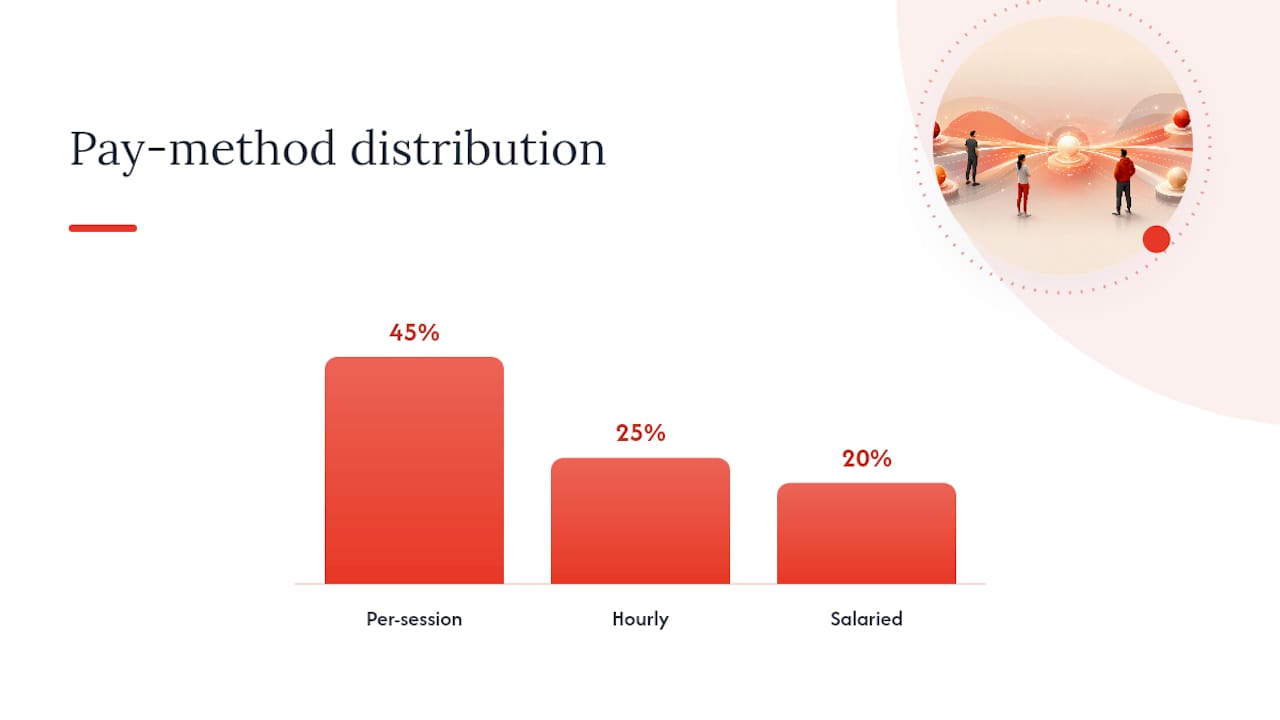
IDEA’s 2023 compensation trends report shows the pay-method distribution as approximately 45% paid per session, 25% hourly, and 20% salaried. Independent contractors in that same data report higher per-session rates than W-2 employees, though the gym trades scheduling control and brand consistency to get there.
How to choose the right model for your gym
Start with four questions before you touch a spreadsheet.
- What is your primary goal right now? Profit protection favors variable pay (commission, per-session). Retention and culture favor a base component. Growth phases often need guaranteed hours to attract talent before your schedule fills.
- What is your overhead share? If rent and utilities eat more than 40% of revenue, a heavy fixed-payroll model is a real risk. Variable pay protects margin.
- Who are your trainers? New trainers need income stability. Veterans with full rosters can thrive on commission-heavy structures.
- What is your legal stance? Employee (W-2) or independent contractor (1099) is not a style choice — it is a legal classification with real consequences. More on that in the compliance section below.
Data to collect before you decide:
- Average session price at your facility
- Expected sessions per trainer per week (realistic, not optimistic)
- Facility overhead as a percentage of gross revenue
- Local minimum wage (state and city, whichever is higher)
- Current trainer certifications and tenure
Pro Tip: Run a 4–8 week pilot with one or two willing trainers before rolling out a new model gym-wide. Track trainer net earnings, client retention, and your own margin weekly. A short pilot surfaces problems — like a base wage that triggers overtime — before they become payroll liabilities.
For the interview side, ask candidates: “How many sessions per week do you expect to run in month one, month three, and month six?” Their answer tells you whether a commission-heavy structure will work for them or set them up to fail.
U.S. benchmarks and worked pay examples you can adapt
The BLS data indicates median annual trainer pay around $46,180–$46,480, with the top 10% earning above $82,050–$90,761. AIHP’s career guide notes that figures climb when benefits, digital revenue, and self-employment premiums are factored in.
Worked Example A — Small community gym, $50/session, 50/50 split: Trainer runs 20 sessions/week × $25 trainer share = $500/week = $26,000/year. That falls below the BLS median, so this gym should add a base of $8–$10/hour for floor time to bring total compensation closer to market.
Template wage scale (copy into job offers):
- Level 1 (0–1 year, 1 cert): Base $12–$14/hr + 30% commission
- Level 2 (1–3 years, 2 certs): Base $15–$17/hr + 35% commission
- Level 3 (3+ years, specialty cert): Base $18–$22/hr + 40–45% commission
- Senior / Lead Trainer: Negotiated base + 45–50% commission + team bonus eligibility
Designing bonuses that actually change trainer behavior
The wrong bonus does nothing. The right one ties a specific trainer action to a business outcome you actually care about.
KPIs worth rewarding:
- Sessions completed per week (volume driver)
- 90-day client retention rate (loyalty signal)
- New client signups attributed to the trainer (growth driver)
- Revenue generated per trainer per month
- Program compliance rate (client results proxy)
Payout mechanics that work:
- Quarterly cadence beats monthly for retention bonuses — it gives enough time to see real retention data.
- Individual bonuses outperform team-only bonuses for session volume; team bonuses work better for culture and cross-referrals.
- Threshold payouts (trainer must hit a floor before any bonus pays) prevent gaming but can feel punitive. All-level payouts (even small amounts for partial achievement) sustain motivation better for mid-performers.
Pro Tip: Tie at least one bonus metric to client outcomes, not just session count. A trainer who books 25 sessions but loses 8 clients in the same quarter is costing you more than they’re earning. Retention multipliers fix that incentive gap.
Connecting trainer bonuses to gym referral programs is one underused lever — trainers who bring in new clients through referrals should see that reflected in their comp.
U.S. legal and administrative checklist for trainer payroll
Classification is the single highest-risk item in trainer compensation. Getting it wrong costs more than the payroll savings.
Employee (W-2) vs. independent contractor (1099) — key criteria:
- Does the gym control when, where, and how the trainer works? W-2.
- Does the trainer set their own hours, use their own equipment, and work for multiple facilities? Possibly 1099.
- The IRS uses a behavioral control, financial control, and relationship-type test. When in doubt, W-2 is safer.
Payroll realities to plan for:
- Payroll taxes add roughly 7.65% employer FICA on top of every W-2 wage.
- Hourly trainers are covered by FLSA overtime rules: over 40 hours/week requires 1.5× pay.
- State minimum wage may exceed federal ($7.25/hr). Check your state and city.
- Benefits (health insurance, PTO, retirement match) carry real dollar values. IDEA recommends assigning those values explicitly in the compensation package so trainers understand total comp, not just take-home.
Written wage agreements are non-negotiable. Document the pay model, tier criteria, review schedule, and bonus formula before the trainer’s first session.
Step-by-step plan to roll out a new pay model
- Weeks 1–2 (Planning): Audit current trainer pay, collect session data, and confirm legal classification for each trainer. Draft the new wage scale using the template above.
- Week 3 (Documentation): Write wage agreements for each trainer. Include model, rate, tier criteria, bonus formula, and review date.
- Week 4 (Communication): Meet individually with each trainer. Explain the new model, show them their projected earnings under it, and answer questions in writing.
- Weeks 5–8 (Pilot): Run the new model for 4–8 weeks with willing trainers. Track trainer net earnings weekly, client retention bi-weekly, and department margin at the end of the pilot.
- Week 9 (Review): Measure against success criteria: trainer earnings stability (within 10% of prior comp), client retention above 85%, and margin at or above target.
- Week 10 (Adjustments): Adjust base rates, commission percentages, or bonus thresholds based on pilot data. Document every change.
- Weeks 11–12 (Full Rollout): Apply the revised model to all trainers. Set a formal 90-day review date and put it in every wage agreement.
Communication script snippet: “Starting [date], your pay will include a base of $X/hour for scheduled floor time plus Y% of each session fee you complete. Your first formal review is [date], when we’ll look at your session volume, client retention, and whether your tier should move up. Here’s the written scale so you can see exactly how raises work.”
Tools and templates you need to run any pay model reliably
Running a commission or hybrid model without the right tools means someone is manually reconciling sessions against pay every two weeks. That breaks.
Essential features to look for in gym management software:
- Session-level revenue tracking tied to individual trainers
- Appointment scheduling with trainer assignment
- Automated commission calculation per session
- Payroll export (CSV or direct integration with payroll providers)
- Client retention dashboards (90-day and rolling)
- Bonus workflow automation (trigger calculations at period end)
Templates every gym needs:
- Written wage agreement (model, rate, tier criteria, review date)
- Tier criteria sheet (what earns a level-up: certs, sessions, tenure)
- Bonus calculation spreadsheet (formula, inputs, payout schedule)
- Pilot reporting dashboard (weekly earnings, retention, margin)
Joinfitnessflow covers all of those features in one platform: session-level revenue tracking, automated commission runs, payroll export, and retention dashboards. A practical example: at month-end, Joinfitnessflow calculates each trainer’s commission automatically from completed sessions, flags any anomalies, and exports a payroll-ready file. No manual reconciliation. For gyms exploring gym management software options, that automation is the difference between a pay model that runs itself and one that creates a weekly admin burden.
Pro Tip: Build your bonus calculation spreadsheet before you announce the bonus program. If you can’t explain the math in 60 seconds to a trainer, the formula is too complicated and will breed distrust.
What gym operators get wrong about trainer pay
The most common mistake is treating pay as a set-and-forget decision. Gyms set a rate at hire, never revisit it, and then wonder why their best trainer left for a competitor offering $3 more per session.
The second mistake is ignoring unpaid floor time. A trainer paid $25/session who spends 10 hours/week on the floor waiting for clients is effectively earning far less per hour than the session rate implies. A base wage for floor time is not a luxury — it is the thing that keeps trainers from burning out and leaving before their roster fills.

Transparency matters more than most owners expect. Savvy trainers increasingly compare how much revenue they generate versus what they keep. Showing a trainer their split percentage, not just their dollar amount, builds the kind of trust that survives a competitor’s recruiting call.
IDEA’s expert guidance is consistent on this: structured career paths and clear performance bonuses produce better retention than base-rate increases alone. Pair that with support for trainers’ own entrepreneurial activities — like helping them launch online classes — and you become the gym they don’t want to leave.
Joinfitnessflow makes trainer compensation easier to run
Accurate commission calculations, automated payroll exports, and retention dashboards in one place: that is the operational case for Joinfitnessflow. Most gym owners spend hours each pay period reconciling sessions to trainer pay. Joinfitnessflow eliminates that by tracking every session at the trainer level, calculating commissions automatically, and exporting a clean payroll file. Retention dashboards show you which trainers are keeping clients and which need support before the problem shows up in revenue.
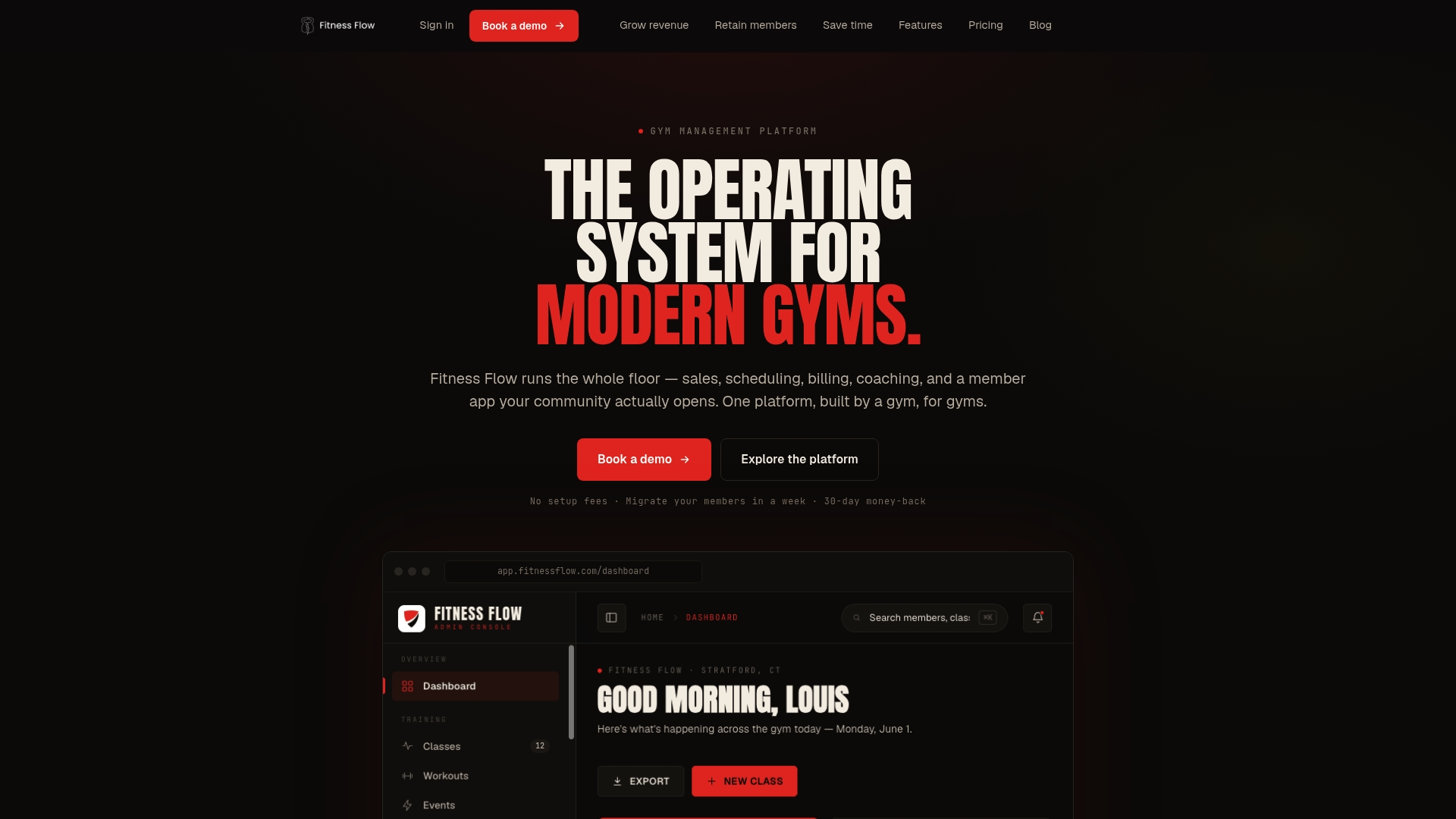
The platform also stores wage agreements and tier criteria, so when a trainer asks “what do I need to do to move to Level 3,” the answer is a 30-second screen share, not a search through email. For classification and tax questions, consult a payroll provider or labor attorney — Joinfitnessflow handles the tracking; your legal team handles the compliance calls.
Start a demo at Joinfitnessflow and see how the commission and payroll tools map to the hybrid model outlined in this guide.
Sources
- Occupational Employment and Wages, May 2023: Fitness Trainers and Aerobics Instructors (BLS)
- Paying Personal Trainers - IDEA Health & Fitness Association
- Breaking down big gym pay (ISSA blog)
This article provides general operational and compensation guidance. Consult a licensed payroll provider or employment attorney for classification decisions and jurisdiction-specific wage requirements.
This article is general information, not a substitute for advice from a qualified lawyer. Consult a qualified legal professional about your own circumstances before acting on anything here.
FAQ
What is the best trainer pay model for a small gym?
A hybrid model combining a modest base wage with per-session commission is the most practical starting point. It protects trainer income while keeping gym payroll variable during slower months.
What commission percentage should gyms pay personal trainers?
ISSA documents typical commission ranges of 30%–60% of the session fee, with higher rates tied to greater session volume in tiered structures.
Should gym trainers be W-2 employees or 1099 contractors?
Classification depends on how much control the gym exercises over the trainer’s schedule, methods, and equipment. When the gym sets hours and location, W-2 is the safer classification; misclassifying a W-2 worker as 1099 exposes the gym to IRS back taxes and penalties.
How do I know if my trainer pay model is competitive?
Compare your total compensation package against the BLS median of roughly $46,000–$46,480/year and call two or three nearby facilities to gauge local rates, as IDEA recommends before setting any wage scale.
How long should a pay model pilot run before full rollout?
A 4–8 week pilot is enough to measure trainer earnings stability, client retention, and department margin. Review results against your success criteria before applying the model to the full team.