
30/60/90 Gym Sales Pipeline for Owners: What to Fix First

A gym sales pipeline works when it turns cold inquiries into booked, confirmed trials, and then into paying members, without a human chasing every lead by hand. The single fastest fix is activating a calendar-integrated booking funnel paired with an automated 24-hour confirmation and nudge sequence. Everything else, from tools to KPIs to cadence, builds on that one move.
TL;DR:
- Automating the booking funnel with calendar integration and instant confirmations significantly reduces lead leaks and increases booked trials.
- Handling follow-ups within the first 24 hours through multi-channel messaging is critical to maintaining interest and improving conversion rates.
- Tracking key KPIs such as lead-to-trial, trial-to-member, and 90-day retention provides clearer insights into pipeline health and necessary adjustments.
- Responding to leads within minutes and simplifying offer packages are the most effective fixes for common pipeline underperformance.
- Using an all-in-one platform helps prevent lead leaks by centralizing data, automating processes, and clarifying ownership of each lead.
Table of Contents
- What Are the Stages of a Gym Sales Pipeline?
- The Tech Stack Behind a Pipeline That Doesn’t Leak Leads
- How Should You Follow Up With Gym Leads?
- Which KPIs Actually Tell You the Pipeline Is Working?
- Why Most Gym Sales Pipelines Underperform
- Inside a Real Gym’s 90-Day Pipeline Rebuild
- Your Implementation Checklist: Week One Through Day 90
- What I’d Fix First If I Ran Your Gym
- How Getfitnessflow Runs This Pipeline for You
- Sources
What Are the Stages of a Gym Sales Pipeline?
Every functioning pipeline moves through four stages: capture, nurture, convert, and onboard/retain. Each stage has one job and one number that tells you whether it’s working.
- Capture: Pull leads from your website contact form, paid ads, walk-ins, and referrals. Watch lead volume by source, and exit criteria means the contact info is verified and a next step is scheduled, not just collected.
- Nurture: Move the person from “interested” to “booked.” The metric is response time; exit criteria is a confirmed date on the calendar, not a maybe.
- Convert: Run the tour or trial and make the ask. The metric is trial-to-member rate; exit criteria is a signed agreement or a clear, dated no.
- Onboard/retain: Turn a new signature into a habit. The metric is 90-day retention; exit criteria is the member hitting a second or third visit within the first two weeks.
A seven-pillar sales strategy that ties lead capture, consultative selling, pricing, and referrals to retention performs better than any single-tactic approach, because each stage feeds the next instead of operating in isolation.
The Tech Stack Behind a Pipeline That Doesn’t Leak Leads
Centralizing your CRM and calendar isn’t a nice-to-have. It’s what stops leads from falling through the cracks between the front desk, the sales team, and whoever’s checking email that day. Gyms running a dedicated booking funnel integrated with a calendar report far more consistent results than gyms juggling a spreadsheet, a separate texting app, and a paper sign-in sheet.
A simple stack of disconnected point tools is cheaper up front, but you pay for it in maintenance hours and mismatched data. An all-in-one platform costs more monthly but gives you one source of truth, so nobody’s guessing which lead already got a callback.
Before you touch a follow-up script, confirm your stack actually does these four things:
- Every capture form (web, ads, walk-in tablet) feeds the same CRM record.
- The booking funnel checks live calendar availability, not a static time slot list.
- Confirmations fire automatically the moment someone books.
- Two-way SMS and email both route to the same inbox your staff checks daily.
Pro Tip: If you can’t answer “who owns this lead right now” in under five seconds, your stack has a leak, no matter how nice the software looks.
How Should You Follow Up With Gym Leads?
Speed wins. Leaving a web inquiry unanswered for more than several hours measurably lowers your conversion odds (https://optimizedgrowth.com/gyms/blog/gym-marketing-member-acquisition-system/), and by 24 hours, a lot of interest has just evaporated.
Here’s a sequence that works for most independent gyms:
- Immediate: Automated confirmation the second someone submits a form or books online.
- 1 hour: SMS from a real staff name, not a bot, asking if they have questions before their visit.
- 24 hours: Email with a map, parking info, and what to bring.
- Day 3 (if no response): A short nurture message with a testimonial or class highlight.
- Day 5: A phone call. Not a voicemail drop, an actual attempt to connect.
The old “10-3-1” rule still holds up: 10 touches, 3 channels, 1 goal, which is a booked and confirmed visit, not just a reply.
When the lead shows up, run discovery with “what” questions instead of “why” questions. “What’s made it hard to stay consistent?” gets a real answer. “Why haven’t you joined a gym before?” gets defensiveness. The connect, open, amplify, confirm, help framework built around this approach treats the close as a natural prescription, not a pitch, and it’s the same structure behind the No Sweat Intro model many coaches already use.
Which KPIs Actually Tell You the Pipeline Is Working?
Five numbers matter more than the rest combined: lead-to-trial rate, trial-to-member rate, speed-to-contact, average membership value, and 90-day retention. Calculate lead-to-trial by dividing booked trials by total leads captured in a given period; trial-to-member the same way, using signed members over trials attended.
A 30/60/90 test window gives you enough data to judge whether a change actually worked, without waiting a full quarter to find out.
CheckpointWhat to measureTarget signal
Day 30
Speed-to-contact, booking rate
Most leads contacted within 1 hour
Day 60
Trial show rate, trial-to-member rate
Show rate trending up month over month
Day 90
90-day retention, average membership value
Retention holding or improving vs. baseline
If trial-to-member lags but show rate is strong, the problem is usually the tour or the offer, not the funnel. If speed-to-contact is slow, fix that before touching anything else. It’s the cheapest lever in the whole system.
Why Most Gym Sales Pipelines Underperform
Four failure modes account for most of the lost revenue in a gym’s pipeline, and none of them require new software to fix.
- Slow response: A lead sits for hours before anyone reaches out. Fix: automate the first touch within minutes, then have a human follow within the hour.
- Inconsistent messaging: Different staff pitch different things. Fix: one script framework, reviewed monthly, not memorized word for word.
- Weak tour or ask: The tour turns into a facility walkthrough instead of a conversation about goals. Fix: train staff to discover first, prescribe second.
- Thin offer stack: One price, one plan, no flexibility. Fix: build two or three clear packages tied to commitment level, not a menu of confusing add-ons.
Fix the response speed first. It costs nothing and moves the fastest.
Inside a Real Gym’s 90-Day Pipeline Rebuild
Getfitnessflow was built around the exact stages described above, because most gym owners don’t need another dashboard, they need the leaks plugged.
Mapped to the pipeline stages:
- Capture: branded lead forms and a public booking page feed one CRM record.
- Nurture: automated SMS and email sequences fire without staff lifting a finger.
- Convert: calendar-confirmed trials show up on staff schedules automatically.
- Onboard/retain: gamified app touches and check-in prompts start the day someone joins.
The biggest shift owners notice isn’t more leads. It’s fewer leads disappearing between the form submission and the front desk.
[Louis’s professional bio related to fitness or gym management expertise], and [first-hand case studies or testimonials authored or collected by Louis] both point to the same pattern: the platform doesn’t create the pipeline, it just stops the pipeline from leaking.
Your Implementation Checklist: Week One Through Day 90
- Week 1: Turn on the booking funnel, connect the calendar, and activate confirmation automation.
- Days 8 to 30: Launch the multi-channel follow-up sequence, train staff on consultative tours, and record baseline numbers for speed-to-contact and trial-to-member rate.
- Days 31 to 90: Adjust your offer stack based on what’s converting, add onboarding touches at 30/60/90 days, and start tracking each month’s leads as a separate cohort.
Pro Tip: Don’t change five things at once in month one. Fix speed-to-contact first, measure for two weeks, then move to the next lever.
What I’d Fix First If I Ran Your Gym
If I had to pick three moves for a struggling pipeline: fix speed-to-contact, replace the generic tour with a discovery conversation, and stop offering one flat price to everyone. Gyms that treat sales like an afterthought pay for it in ghosted trials. Run one change at a time, measure it honestly, and let the numbers, not your gut, decide what’s next.
— Louis
How Getfitnessflow Runs This Pipeline for You
Getfitnessflow is built to run the exact pipeline this guide describes, without you stitching together four separate apps to do it. Lead capture, branded booking pages, automated confirmations, and multi-channel follow-up all live in one system, so a lead never sits in a forgotten inbox waiting for someone to notice.
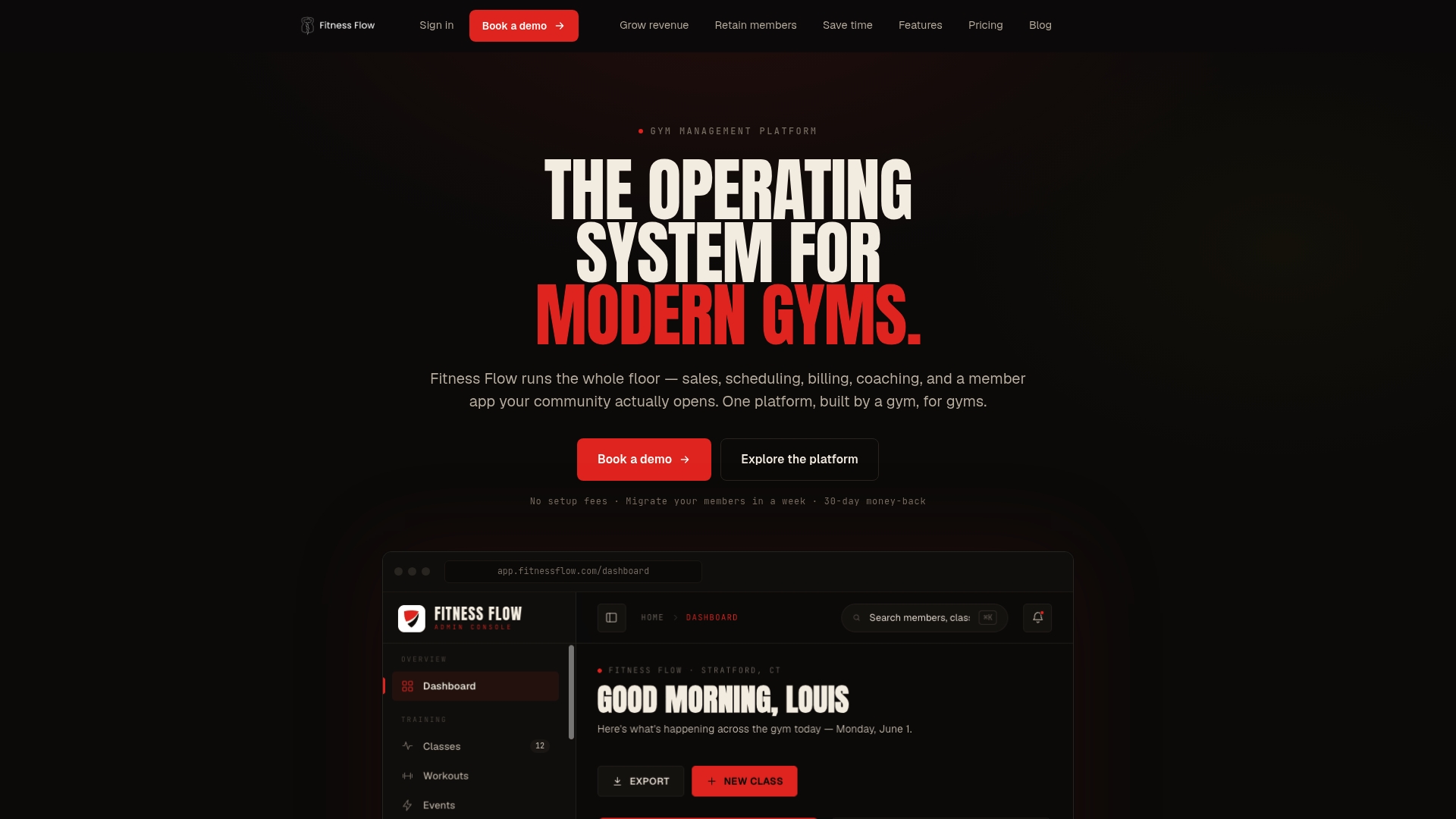
It fits independent gym owners and studio managers who are tired of losing trials to slow follow-up and inconsistent tracking, especially operators managing more than one location where a shared spreadsheet stops working fast. The analytics layer shows exactly where leads stall, so you’re fixing the actual bottleneck instead of guessing. If your pipeline is leaking leads right now, explore a Fitness Flow demo and see which stage needs attention first.