

Gym Owners: 5 Steps to Save 20–30% of Cancellations and Stay Compliant

A well-designed cancellation flow intercepts a member’s quit moment, makes cancellation lawful and simple, offers targeted save options, and logs the result to support Gym SEO Services for better marketing and membership growth. Done right, it can recover a meaningful share of cancel attempts while keeping you clear of federal cancellation rules. The one thing to fix this week: audit whether your cancel path is as easy to use as your sign-up path.
TL;DR:
- A well-designed cancellation flow can recover up to 20 to 30 percent of cancel attempts when targeting members with relevant offers based on reason codes.
- The flow should consist of five steps: confirm intent, validate account status, present a tailored offer, require explicit acceptance, and schedule follow-up, with clear exit points at each stage.
- Cancellation processes must be integrated with software and staff workflows, employing a simple online cancel button, reason dropdowns, and logged responses to ensure compliance and effectiveness.
- The FTC mandates that online cancellation must be at least as easy as sign-up, with clear disclosure of terms before billing, documented consent, and logs proving cancellation requests.
- Tracking key performance indicators such as attempts, saves, and save rate, along with testing offer types and timing, helps optimize retention and justify the costs of the save flow.
Getfitnessflow
Turn Cancellation Moments Into Retention
Fitness Flow connects scheduling, billing, member engagement, and analytics in one platform built for modern gyms.
Table of Contents
- What a cancellation flow is and why it matters for retention
- A practical 5-step save-flow playbook: the offer menu and sequence
- Wiring the flow into your software and staff workflows
- Compliance checklist for the click-to-cancel era
- Measuring success: KPIs, math, and reporting cadence
- Why transparent cancellation systems win long term
- Putting the playbook into a working system with Fitness Flow
- Sources
- FAQ
What a cancellation flow is and why it matters for retention
A cancellation flow, sometimes called a save flow, is the sequence a member goes through the moment they try to quit: the trigger, the questions you ask, the offers you present, and the record you keep. It can start from several places: the member app, a web portal, a front-desk conversation, or a failed payment that never gets updated.
That moment matters more than any win-back email you send later. A member who has already decided to leave and typed out their reason is more reachable right than after a week of silence, according to customer retention research from Harvard Business Review, which found that keeping the right customers pays off more than matching acquisition spend. Waiting for a monthly newsletter to change their mind rarely works as well.
Build your reason menu around the patterns gyms actually see:
- Cost concerns or a change in household budget.
- Moving, travel, or a schedule change that breaks the routine.
- Injury, health issue, or a life event pausing activity.
- Lack of use or motivation.
- Dissatisfaction with classes, equipment, or staff.
Each reason should route to a different response. A cost objection deserves a different offer than an injury pause.
A practical 5-step save-flow playbook: the offer menu and sequence
The flow works best as five deliberate steps, each with a clear exit if the member still wants to cancel.
- Intercept and confirm intent. When a member initiates cancellation, show one short screen asking them to confirm and pick a reason before anything else happens.
- Validate the account. Check billing status, contract terms, and freeze eligibility so the offer you make actually fits their situation.
- Present a matched offer. A cost objection gets a discount or a lower tier; a schedule conflict gets a freeze; an injury gets a medical hold; low usage gets a check-in call or a class recommendation.
- Require explicit acceptance. Never auto-apply a save. The member should click to accept a specific offer, and that acceptance gets logged with a timestamp.
- Confirm and schedule follow-up. Whether they accept an offer or complete the cancellation, send a written confirmation and set a reactivation touchpoint for 30 to 60 days out.
The offer menu should stay short: a temporary discount, a freeze (illness, travel, injury), a downgrade to a lower tier, or a pause with a fixed return date. Save discounts should require a checkbox confirming the member understands the new price and duration, which gives you documented consent rather than an assumed change, a step recommended in the FTC’s own rulemaking record on negative-option programs.
If the member declines every offer, let them cancel without another prompt. A second or third save attempt after a clear “no” reads as pressure, not service.
Pro Tip: Route injury and medical cancellations to a documented exception path rather than the standard save menu, since these often carry separate legal protections that a discount offer cannot replace.
Wiring the flow into your software and staff workflows
The playbook only works if it lives inside your systems, not in a manager’s memory. A handful of software primitives cover most gyms:
- A one-click cancel button inside the member app and web portal, not buried in a support ticket.
- A reason dropdown that feeds directly into your CRM instead of a free-text field nobody reads later.
- A save-offer modal that displays the matched offer based on the reason selected.
- A scheduled cancel date field, separate from an immediate stop-charges action, so both options exist and get logged.
Front-desk and phone scripts need the same discipline as the software. A compliant script confirms the request, asks the reason, offers one relevant option, and accepts a “no” without repeating the pitch. Staff should never require a phone call or in-person visit to process a cancellation that started online, since that mismatch is one of the clearest triggers for regulatory attention.
Industry playbooks report converting roughly 20 to 30 percent of cancel attempts when save offers are well targeted to the stated reason, a range worth testing against your own numbers before assuming any single offer type will perform.
On the automation side, build an undo window that lets a member reverse a cancellation within a set number of days, sync the outcome to your billing provider so charges stop or continue correctly, and push every result (reason, offer shown, offer accepted or declined) into your analytics dashboard. Your integration checklist should cover the billing processor, email and SMS tools, the member app, and whatever reporting layer aggregates the outcomes.

Compliance checklist for the click-to-cancel era
The FTC’s final click-to-cancel rule requires sellers to make cancellation at least as easy as sign-up and to offer a simple mechanism through the same medium used to enroll. The accompanying Federal Register text adds that material terms must be disclosed before billing information is collected, and that consent to any recurring charge must be express and documented.
Practical steps that keep a save flow inside those lines:
- Match the cancel channel to the sign-up channel: online enrollment means online cancellation.
- Disclose price, duration, and renewal terms before the first charge, not buried in a later email.
- Document consent for every save offer with a timestamped acceptance.
- Keep logs proving a cancellation request was received and that charges stopped.
Compliance areaWhat the rule requiresPractical action
Cancel parity
Cancellation as easy as sign-up
Match cancel channel to sign-up channel
Disclosure
Material terms shown before billing
State price and renewal terms up front
Consent
Express, documented agreement
Timestamped checkbox for any save offer
Recordkeeping
Proof charges stopped on request
Log every cancellation and its outcome
Law firms tracking the rule’s rollout, including

Measuring success: KPIs, math, and reporting cadence
Track cancel attempts (every time a member starts the flow), saves (offers accepted), and save rate (saves divided by attempts) as your core numbers. Set a retention uplift window, typically 90 days, to confirm a saved member actually stays rather than canceling again once the offer expires.
The math behind the business case is simple: if a save costs you a $20 monthly discount for three months but the member’s average tenure is 18 months, the incremental revenue from that save far outweighs the discount. Divide your total discount spend by the number of confirmed saves to get a cost-per-save figure you can compare against average member value.
Worth testing over time:
- Offer type: discount versus freeze versus downgrade, by cancellation reason.
- Timing: showing the offer immediately versus after a short delay.
- Messaging: a written explanation versus a live conversation for high-value members.
Review save rate, offer acceptance by type, and reactivation rate weekly at first, then monthly once the flow stabilizes.
Why transparent cancellation systems win long term
The instinct to make cancellation hard is short-term thinking. A member who fights through hidden menus and phone-only cancellation lines does not come back, and they leave a bad review or a chargeback dispute behind them. A flow that is honest about the process, offers something real, and lets a firm “no” stand builds more trust than any retention trick.
Automation should handle the mechanics: logging, routing, timing. Staff should handle the moment: listening to the actual reason and responding like a person, not a script reading off a discount table. Gyms that get this balance right see fewer disputes and steadier member relationships, not just a better save rate.
Putting the playbook into a working system with Fitness Flow
Building this flow from scratch across your app, CRM, and billing tool takes real engineering time most gym teams do not have. The whole cycle lives in one platform: a member app for the cancel request, CRM fields for reason tracking and offer logging, billing sync so accepted saves and confirmed cancellations both update charges correctly, and reporting that shows save rate alongside retention.
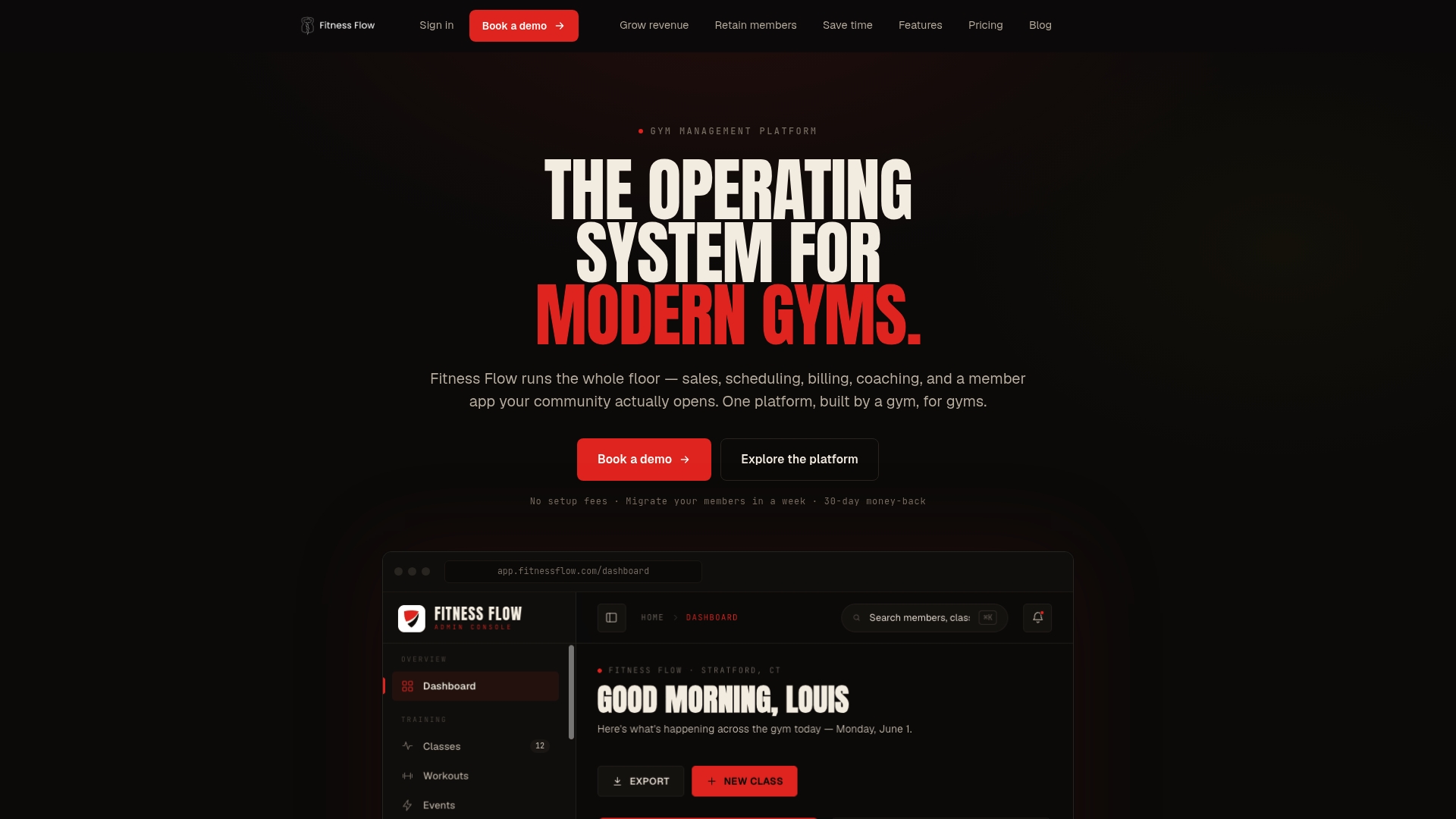
- Branded member app where cancellation, freezes, and downgrades live in one place.
- CRM workflows that route each cancellation reason to the right save offer automatically.
- Billing sync that stops or adjusts charges the moment a decision is logged.
- Reporting dashboards built for save rate and retention tracking.
Gyms report an average increase in member retention and save time on administrative work. If you want to see the save-flow tools inside various plans, visit Fitness Flow to check pricing and book a demo.
Sources
For the legal text and the retention research behind this playbook, see the FTC’s click-to-cancel rule, the Federal Register filing, GT Alert’s compliance summary, and the HBR retention study linked above.
- FEDERAL TRADE COMMISSION 16 CFR Part 425 Negative Option Rule (Federal Register)
- The value of keeping the right customers — Harvard Business Review
FAQ
How do I cancel a gym membership online?
Most gyms with a compliant cancellation flow let you cancel directly from the member app or web account without calling or visiting in person. Look for a cancel option under account settings, confirm your reason, and save any confirmation you receive.
Which gym memberships are hardest to cancel?
Contracts that require a phone call or in-person visit to cancel, especially when sign-up happened entirely online, tend to be the hardest. Under the FTC’s click-to-cancel rule, that mismatch is exactly what regulators are targeting.
Is it illegal for gyms to make cancellation difficult?
Under the FTC’s negative-option rule, sellers must make cancellation at least as easy as sign-up, so requiring a harder process than enrollment violates federal requirements. Some states add further consumer-protection rules on top of that federal floor.
Can I cancel a 12-month gym contract early?
It depends on the contract terms and your state’s consumer-protection laws, which sometimes allow exceptions for relocation, injury, or documented hardship. Check your gym’s written policy and your state attorney general’s guidance for specifics, since terms vary by contract and location.